admin
2025-09-12 | 0 comments
Share this:
When we talk about home insulation, we mean a process that helps reduce heat transfer. This is important to keep heat from escaping your home in winter. And in summer, conversely, insulation prevents heat from getting inside. What is thermal insulation? Imagine your home is a thermos. A good thermos keeps your tea hot, right? It's the same with your home: high-quality thermal insulation maintains the desired temperature inside.
Your home comfort directly depends on it. Thermal insulation helps maintain a stable temperature in rooms. You'll forget about drafts and cold corners. It also prevents dampness and mold. This is crucial for the health of everyone living in the house.
Thermal insulation works simply: it creates a barrier to heat. Less heat escapes through walls, roofs, floors, and even windows. If your home loses less heat, it needs less heating. This means you spend much less energy.
According to experts, good home insulation can reduce your heating costs by 30-50%. Imagine how much money will remain in your wallet. One client living in a private house noticed a significant decrease in gas bills after insulation. His neighbors, whose houses are not insulated, pay much more for heating during the same winter months.
Thermal insulation ensures a stable temperature inside the house. You won't have to bundle up in a sweater or, conversely, turn on the air conditioner at full blast. The temperature will be pleasant and uniform throughout all rooms. This creates true coziness.
In addition, insulation helps prevent mold and dampness. If walls freeze, condensation forms on them. And condensation is an ideal environment for mold growth. Insulation shifts the dew point outside the wall, preventing these problems. Many thermal insulation materials also absorb sound well. They reduce street noise, making your home quieter.
Temperature fluctuations and humidity are the real enemies of building materials. Brick, concrete, and wood suffer from constant freezing and thawing. Heat saving protects these structures from destructive influences. It is like a shield for your home.
When the temperature inside the walls is stable, the risk of their deformation is reduced. This extends the service life of the entire building. Your home will stand longer and require fewer repairs.
Choosing insulation is an important step. Each material has its own characteristics. Let's look at the most popular options.
Mineral wool is very popular due to its properties. It is non-flammable, allows vapor to pass through well, and retains heat well. This material serves for many years. It is often used for insulating walls, roofs, and ceilings.
Advantages include its environmental friendliness if you choose trusted manufacturers. The price of mineral wool is quite affordable, and its installation is simple. The main disadvantage is that it can absorb moisture if the vapor barrier is damaged. It also needs to be protected from strong winds.
Expanded polystyrene has very low thermal conductivity. It is very durable, especially extruded polystyrene (XPS). XPS hardly absorbs water. These materials are ideal for facades, floors, foundations, and roofs.
They are durable, moisture-resistant, and provide good noise insulation. However, they have a drawback: they are flammable, requiring the addition of fire retardants. They also do not allow vapor to pass through well, sometimes requiring additional ventilation. For example, XPS is often chosen for insulating foundation basements because it is moisture-resistant.
PUF is one of the most effective insulation materials. It has the lowest thermal conductivity coefficient. When applied, it creates a seamless coating. The material adheres perfectly to most surfaces. It is often sprayed onto roofs, walls, floors, and even cold storage rooms.
The main advantages are high efficiency and durability. It creates a coating without "cold bridges." However, applying PUF requires special equipment. It is also relatively expensive and does not like direct sunlight. Construction experts note:
"Polyurethane foam is one of the most effective insulation materials available today, especially when it comes to minimizing heat loss through complex structures."
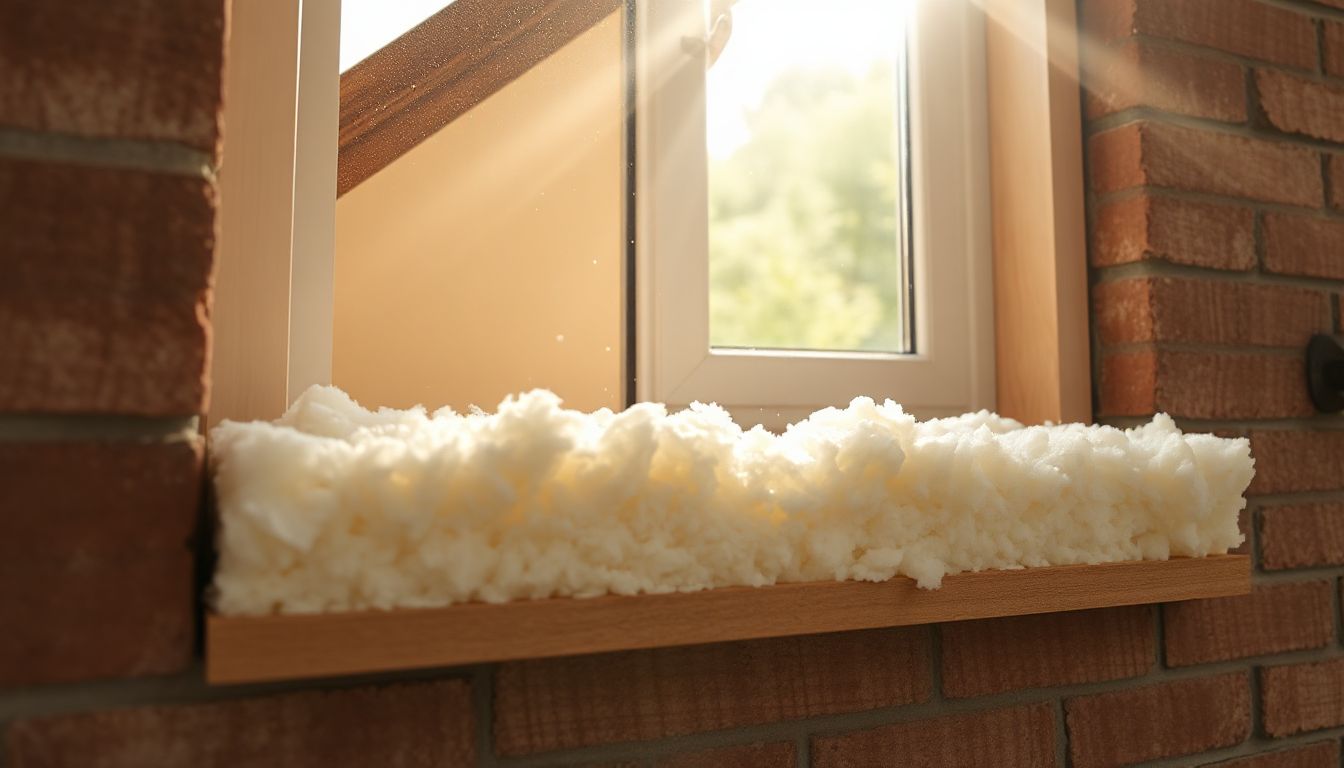
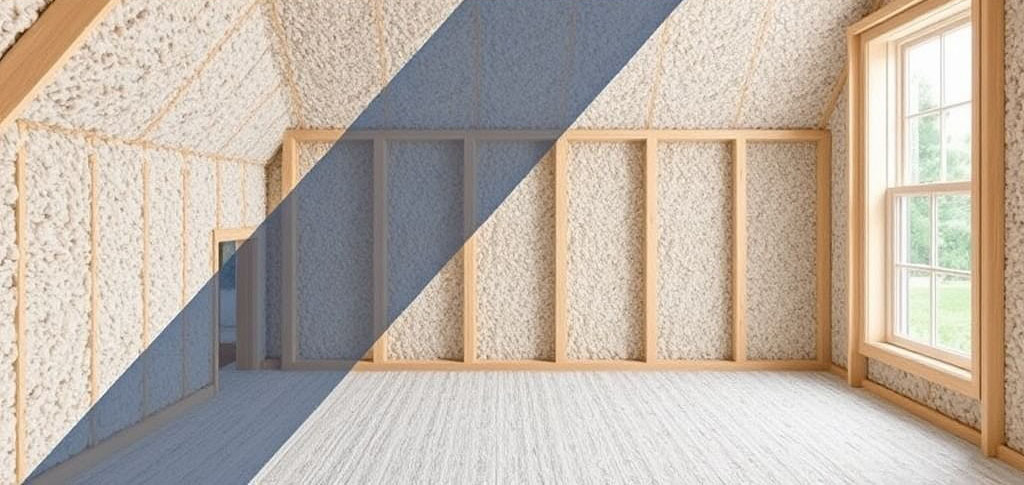
Ecowool is made from recycled paper. It retains heat well and absorbs sounds. It is also permeable to water vapor, allowing the house to "breathe." Ecowool is often used to insulate attics, lofts, and frame walls.
This is an environmentally friendly material that fills all voids well. It is also not very expensive. However, ecowool must be protected from moisture. Over time, it can shrink if blown in incorrectly. Special equipment is also required for installation.
To effectively insulate your house, you need to know where the heat is escaping. Heat does not leave your home evenly. Every building element has its weak points.
Warm air always rises. If the roof or attic is poorly insulated, most of the heat simply escapes outside. This is one of the largest heat losses in a house. Mineral wool, polyurethane foam, or ecowool are well suited for roofing. They can be laid between the rafters or directly on the floor.
Heat loss through walls depends on their type. Brick, block, or frame houses have different characteristics. Walls can be insulated from the outside or from the inside. External insulation is preferable. It eliminates cold bridges and moves the dew point outside the wall. When insulating walls from the outside, be sure to consider the type of façade and the properties of the insulation to avoid moisture problems.
A cold floor can be a real problem. The foundation can also freeze, letting in cold from the basement or ground. Insulating the floors of the first floor is very important. EPS or foam glass are often used for the foundation. Don't forget about vapor barriers and waterproofing.
Even the newest windows and doors can let in heat. They become "cold bridges" if they are poorly installed or the structures themselves are of poor quality. Choose windows with energy-efficient double-glazed windows. Make sure the seals are of good quality. All joints must be hermetically sealed.
There are several basic methods for insulating a house. Each method is suitable for different situations. The choice depends on the design of the house and your goals.
External facade insulation is the most effective method. There are two main methods. A "wet" façade involves applying plaster layer by layer directly onto the insulation. A ventilated façade creates an air gap between the insulation and the exterior cladding material. These methods ensure high efficiency. They also protect the supporting structures and improve the home's appearance. For example, you can install beautiful facade panels over a layer of insulation secured with brackets.
Sometimes external insulation is simply impossible. For example, if the house has historical value or there are restrictions from neighbors. In such cases, internal insulation is used. However, this method has its drawbacks. It reduces the usable area of the rooms. There is a risk of condensation forming inside the wall. Therefore, a very thorough vapor barrier is necessary. We recommend using internal insulation only in extreme cases. Do this with extreme caution.
Roofs and floors are important places for insulation. Mineral wool, ecowool, or polyurethane foam are often used here. Vapor barrier is very important. Steam from the rooms easily penetrates the insulation. This reduces its effectiveness and leads to dampness. Proper installation of a roofing layer, including a vapor barrier on the warm side, is essential to ensure long-lasting insulation and prevent leaks.
Choosing the right insulation and installation specialists is a serious matter. The warmth and energy efficiency of your home depend on it. Don't take this lightly.
When choosing insulation, look at several important characteristics:
When choosing a contractor, always look at their experience and reputation. Ask to see their portfolio, read customer reviews. Find out if their employees have certificates. What guarantees do they provide for their work? The contract should be transparent. It should clearly outline all work, deadlines, and costs. Don't skimp on installation quality. Even the best insulation will not work effectively if installed incorrectly.
Insulating your home is more than just a renovation. It's a smart investment in your comfort and future. You'll save on utility bills. Your home will become much more comfortable. It will last longer, requiring less maintenance.
We recommend auditing your home's heat loss. You might be surprised at how much heat is wasted. Consider insulation a worthwhile investment. High-quality insulation doesn't just reduce costs. It also protects your health and the planet by reducing energy consumption.
Previous article
Is renovating fun? Yes! If you know budgeting secrets! How to estimate the cost of a home renovation
Next article
Building a house without permission: the consequences of illegal construction
Want to stay up-to-date on all the latest news in construction, design, renovation, and energy efficiency? Subscribe to the Kedr News Telegram channel.
 subscribe