admin
2025-09-17 | 0 comments
Share this:
Today, thermal insulation is the basis of comfort in the home. It helps to significantly reduce heating bills. High-quality insulation extends the lifespan of a building. Now energy prices are rising, so the right choice of insulation is more important than ever. Environmental awareness also pushes towards better solutions.
We will consider the main types of insulation. The article will help you make an informed, correct choice.
Thermal conductivity shows how well a material conducts heat. It is measured in W / (m K). The lower this value, the less heat leaves your home. Low thermal conductivity is very good. For example, mineral wool has a value of about 0.035-0.045 W / (m K). Expanded polystyrene has a value of 0.030-0.040 W / (m K). A material with low thermal conductivity will allow you to make thinner walls. At the same time, your home will remain warm.
Vapor permeability is the ability of a material to pass water vapor. High vapor permeability allows the walls to "breathe". This way, excess moisture goes outside. This protects against condensation inside the walls. Condensation can cause mold and structural damage. Good vapor permeability maintains a healthy indoor climate. It also prolongs the life of building materials.
Home safety starts with materials. Flammability classes indicate how a material will behave in a fire. NG means non-flammable. G1 means slightly flammable. G4 means highly flammable. Mineral wool is classified as non-flammable (NG) materials. Expanded polystyrene is usually classified as G3 or G4. For residential premises, it is important to choose less flammable insulation materials. This is especially true for walls and roofing.
It is important that the insulation is safe for you. Some materials emit harmful substances. They can cause allergies. Natural insulation materials, such as ecowool, are usually very environmentally friendly. They are made from recycled materials. There are also modern formaldehyde-free insulation materials. Choose materials with the appropriate certificates. This guarantees their safety for health.
Insulation should last a long time. Its service life depends on many factors. The material must be resistant to moisture and rot. Rodents can also damage some types of insulation. For example, expanded polystyrene is not afraid of moisture. Mineral wool is resistant to rot. Incorrect installation will significantly reduce the service life of the insulation. Choose durable and reliable solutions.
Mineral wool is a fibrous material. It is made from rocks or glass. It retains heat very well. Mineral wool is almost non-flammable (NG class). The material allows vapor to pass through well. Therefore, the walls "breathe". It is used for walls, roofs, and ceilings. Basalt wool is denser and stronger than glass wool. Glass wool is lighter and easier to cut. Choose the density depending on the application.
Expanded polystyrene is a lightweight cellular material. It has very low thermal conductivity. The insulation is almost impermeable to moisture. EPS is used for facades and floors. EPS is denser and stronger than regular EPS. It withstands moisture even better. EPS is ideal for foundations and basements. It is important to install it without gaps. These materials are flammable (G3-G4).
PUF is a unique sprayed insulation. It is applied in liquid form and expands quickly. PUF creates a seamless coating. This eliminates all cold bridges. The material adheres perfectly to any surface. It has very low thermal conductivity. Spraying requires special equipment. PUF is suitable for roofs, walls, and complex structures.
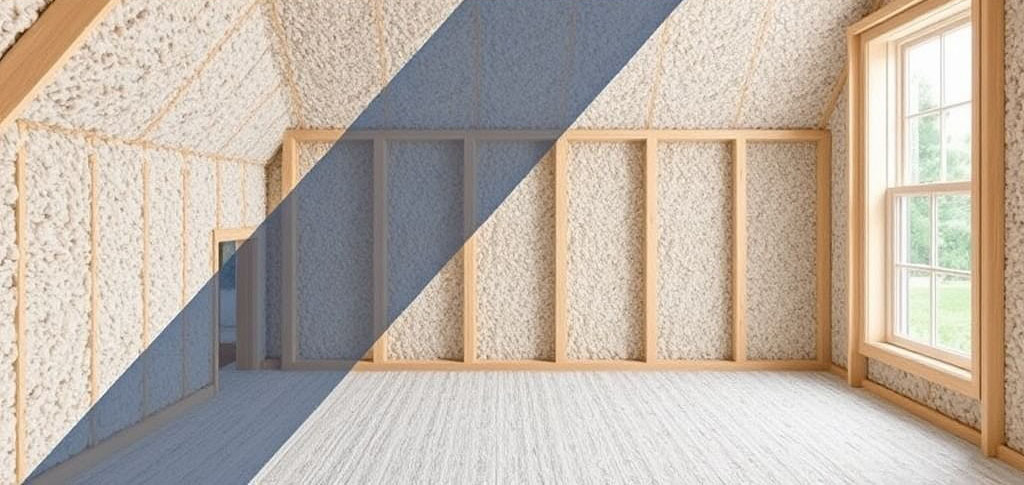
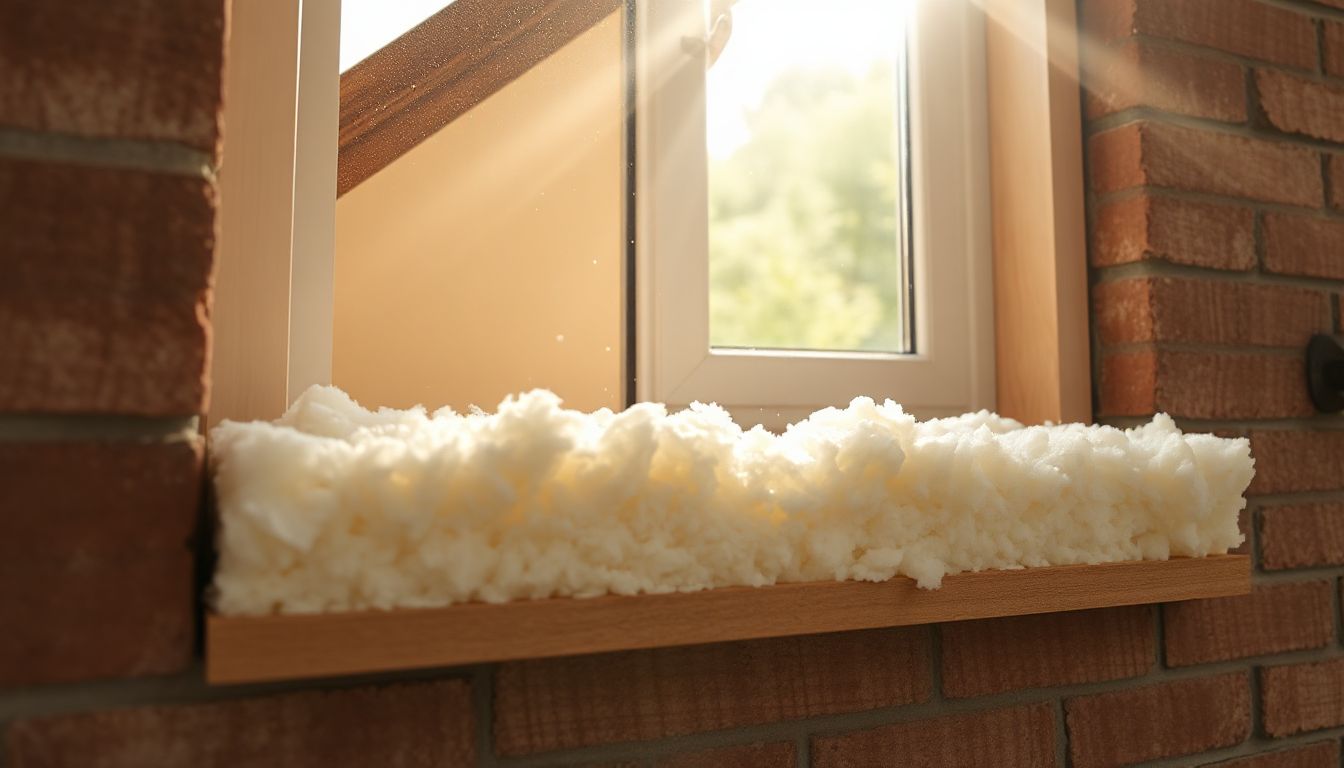
Ecowool is made from recycled paper. It is an environmentally friendly and affordable material. It retains heat well and absorbs noise. Ecowool is permeable to water vapor, allowing the walls to breathe. It can be blown into cavities, creating a continuous thermal insulation layer. Ecowool is treated with fire retardants, which reduces its flammability. However, it is sensitive to moisture.
Natural insulation is the choice for those who value nature. They are made from flax, hemp, and wood fibers. Straw blocks are also used. These materials are environmentally friendly and harmless. Their thermal conductivity is comparable to mineral wool. Such insulation "breathes" well. However, they can be more expensive and less available. Their installation requires a special approach.
| Insulation | Thermal conductivity (λ), W/(m K) |
|---|---|
| Polyurethane foam (PUF) | 0.020 - 0.030 |
| Extruded EPS | 0.028 - 0.034 |
| Expanded polystyrene (EPS) | 0.032 - 0.040 |
| Basalt wool | 0.035 - 0.042 |
| Glass wool | 0.038 -0.045 |
| Ecowool | 0.037 - 0.042 |
| Natural insulation materials | 0.040 - 0.050 |
The table clearly shows the difference. Polyurethane foam and EPS are the leaders in this indicator.
Materials transmit vapor differently. This is important for the humidity regime of walls.
Choose insulation based on the wall structure. This will prevent moisture accumulation.
The price of insulation includes several items. This is the cost of the material itself per square meter. You need to take into account delivery, as well as installation work. Additional materials, such as fasteners and membranes, also affect the budget. Expanded polystyrene is usually one of the most affordable. Polyurethane foam, although more expensive, saves on installation. It does not require fasteners. Be sure to calculate the entire estimate.
Each insulation material is suitable for its own purposes:
Cold bridges are areas where heat escapes from a home. They occur due to poor installation. These can be gaps between insulation boards. Cold bridges also form near window openings or at fastening points. They significantly reduce the effectiveness of insulation. It is important to ensure complete tightness of all layers.
Insulation that is too thin will not achieve the desired effect. You will continue to spend a lot of money on heating. Excessive thickness is also not always justified. It increases costs. Calculate the required thickness for your climate zone. Special online calculators will help you with this. Consider the wall material.
Incorrect installation will ruin even the best insulation. The insulation may sag. Gaps may appear. Vapor and wind barrier membranes must be installed correctly. Any errors reduce thermal insulation of houses. They can lead to moisture. Always follow the manufacturer's instructions.
The use of flammable materials where prohibited is dangerous. For example, do not use flammable insulation near chimneys. This can cause a fire. Always check the flammability class of the material. Comply with all fire safety regulations. Your life and the safety of your family depend on it.
"Choosing insulation is an investment. It will pay off in comfort and savings," says a well-known builder.
"Don't skimp on installation quality. Even the best material can perform poorly due to errors."
The engineer adds:
"Always look at vapor permeability. This is the key to a healthy microclimate inside the walls."
When purchasing, carefully study the markings. It should be clear and understandable. Check the integrity of the packaging. Do not buy damaged rolls or slabs. Make sure the material is dry. Some fakes may have an unpleasant odor. High-quality insulation usually doesn't have a strong odor.
Complex work is best left to the professionals. Spraying polyurethane foam requires specialized equipment. Experience is also needed to work with it. Insulating roofs with complex shapes or large-scale façade work. Professionals will ensure proper installation. They will provide a guarantee for their work. This will save you time and stress.
Which insulation is better? There is no ideal insulation. The choice always depends on your needs. Consider your budget and construction conditions. Remember thermal conductivity, vapor permeability, and safety.
Always use an integrated approach. Perform accurate calculations. Don't be afraid to consult with specialists. Only then will you make an informed choice. This will ensure the durability and comfort of your home.
Previous article
The Heart of the Home: How to Create a Renovation the Whole Family Will Love
Next article
Construction without design documentation: risks, consequences, and legal solutions
Want to stay up-to-date on all the latest news in construction, design, renovation, and energy efficiency? Subscribe to the Kedr News Telegram channel.
 subscribe