admin
2025-12-13 | 0 comments
Share this:
Imagine waking up on a winter morning and the floor under your feet is already warm. No cold tiles or drafts. The demand for underfloor heating is growing rapidly. People see it as a replacement for old radiators. It is not just warmth, but uniform comfort from radiation. The temperature is distributed evenly, without fluctuations. You feel cozy from the very bottom of the room.
These systems save energy. They use less gas or electricity than radiators. In this article, we will analyze all types of underfloor heating. You will learn how to choose the right option. We will show you the installation steps to avoid mistakes. This will help you invest in your home wisely.
Underfloor heating changes the life in the home. But like everything, it has pros and cons. Let's examine them honestly. This will help you decide whether to install such a system in your home.
Uniform heat is good for your health. Dust does not fly through the air, as from radiators. The temperature at your feet is higher, and your head does not overheat. This creates an ideal microclimate. Children and allergy sufferers will appreciate the clean air.
No visible pipes. The room looks stylish. You can arrange furniture wherever you like. Heat comes from below, so you feel cozy even on cold days. Many people report sleeping better without the dry air from radiators.
Installation is expensive up front. Materials and labor add to the budget. The floor becomes 5-10 cm higher. This is a problem in older apartments with low ceilings.
Repairs are complicated. If a pipe bursts, you will have to dismantle the screed. In electric underfloor heating systems, the cable can burn out. But with good installation, such problems are rare. Just plan ahead.
Radiators heat the air, but the heat escapes upward. This is inefficient. Warm floors use radiation. It heats objects and people directly.
According to research, you save up to 20% energy.
In cold climates, warm floors work better. They maintain a stable temperature. Radiators create dryness and drafts. Choose warm floors if you want comfort without unnecessary expenses.
Water warm floors are suitable for large houses. They run on hot water from the boiler. This is a reliable option for new buildings. Installation is more complicated, but pays for itself over time.
An underfloor heating system includes a manifold. It distributes water through the pipes. PEX or PERT pipes are flexible and durable. Underneath them is a layer of insulation, like XPS. On top is a concrete screed. The boiler supplies the heat.
House insulation prevents downward losses. The manifold balances the flow. Without it, some rooms will be hotter than others.
Pipes are laid in a spiral or zigzag. Spiral heating is more even. The distance between pipes is 10-30 cm, depending on the load. Calculate based on the area of the room.
Balance the manifold. Unscrew the valves so that the heat flows evenly. This is the key to success. Use clips to fix the pipes to the mesh.
In a private house of 100 m², a water floor is ideal. It integrates with a gas boiler. Or with a solid fuel boiler. It is also suitable for a heat pump. Less often in apartments, due to complexity.
Imagine a house with a wooden floor. The water option heats the entire floor evenly. Savings on heating are noticeable in winter.
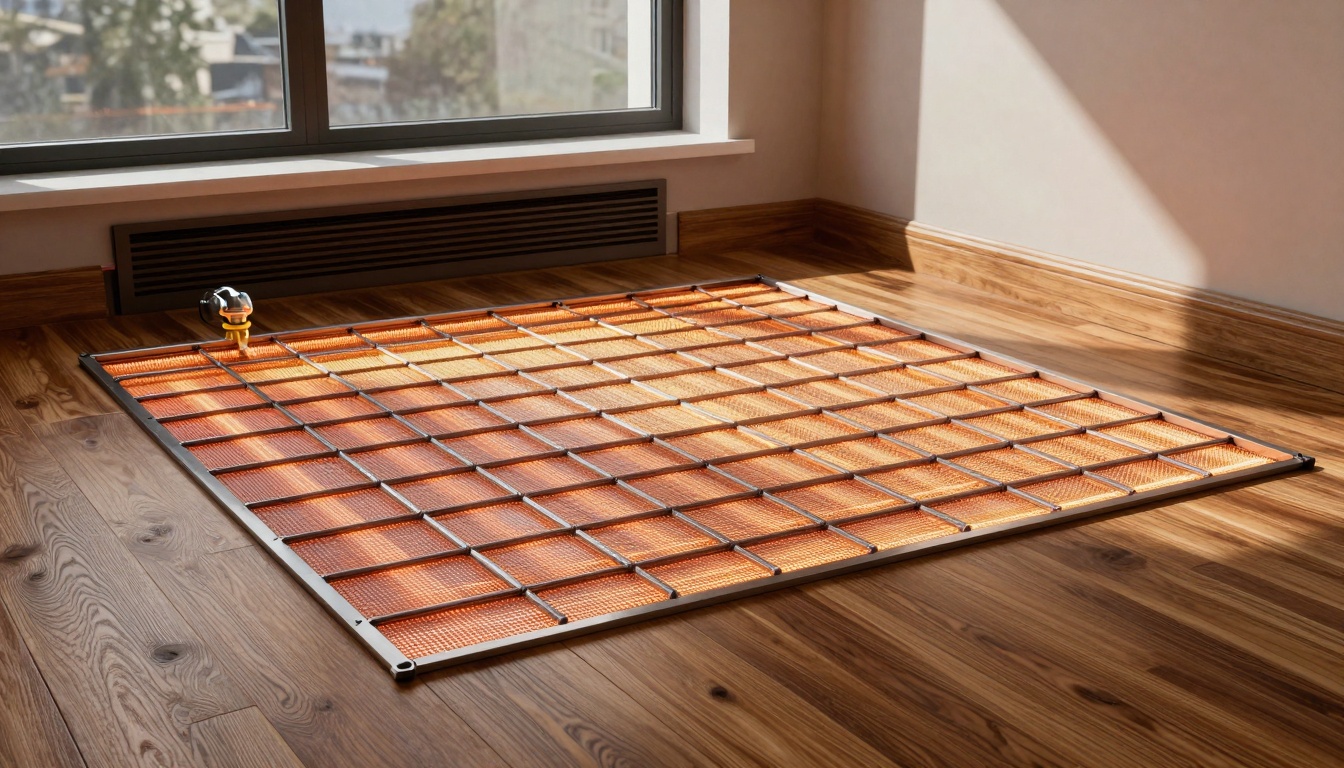
Electric underfloor heating is easier to install. It heats up quickly. It is suitable for renovations in small rooms. The floor height does not increase much. This is a salvation for bathrooms.
The cable can be single-core or double-core. Double-core is quieter and safer. Power is 10-20 W per m². It is laid in the screed for heat inertia.
The cable heats reliably. But without insulation, the heat will go to the basement. Connect through a thermostat.
Mats are cable on mesh. They are glued directly into tile adhesive. The thickness is only 3-4 mm. Ideal for a bathroom or kitchen.
Installation is quick. Unroll, lay, connect. No need for a thick screed. Heats up in 30 minutes.
The film emits a far IR beam. It heats up bodies, not the air. Heats up in minutes. Lays under laminate or parquet.
A reflective layer is needed under the film. The foil will return the heat upward. Do not install in wet places. Suitable for dry rooms.
Now let's get down to business. How to choose materials? Calculations will help you avoid mistakes. The right choice will extend the life of the system.
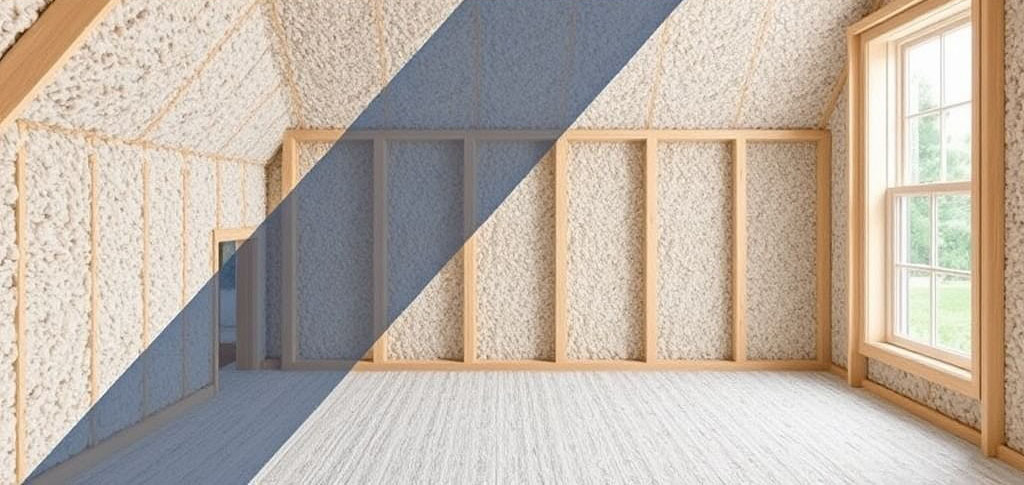
XPS insulation 20-50 mm thick is a must. It blocks heat downwards. Add waterproofing in the bathroom. Roll material will protect against water.
Without it, the floor is wasting energy. Wet areas suffer from mold. Choose high-quality materials.
Temperature controllers can be simple or smart. Mechanical ones are inexpensive, but without software. The Wi-Fi model can be controlled from a phone.
Install the sensor in the floor. It will protect against overheating. Don't rely only on air.
The smart option saves up to 15% of electricity.
First, calculate the heat loss in the room. The formula is simple: multiply the area by the coefficient. For the cable, take 150 W/m² in cold zones.
The pipe pitch is 15 cm for strong heating. Consult a specialist. This will save money.
Installation is a sequence of steps. Follow them, and everything will go smoothly. Suitable for water and electricity.
The base must be level. Remove debris. The damper tape around the perimeter dampens the expansion of the screed.
The tape is 10 mm wide. It will prevent cracks. Check the level with a laser.
First, insulation. Reinforcement mesh on top. Fix the pipes with clips or tape.
Stretch the cable evenly. Do not cross it. Distance from the walls 10 cm. Everything is ready for pouring.
For water - pressure test at 6 bar. Hold for 24 hours. No leaks? Pour the screed.
Mixture: cement, sand, water. Thickness 5 cm. Dry for 28 days. Do not trample earlier.
Underfloor heating is comfort and savings. Water is for large spaces, electric - for renovation. The choice depends on the house and wallet. The main thing is good insulation and temperature control. Then you will save on bills.
The finishing coating is important. Tiles will withstand 28°C. Laminate - up to 27°C. Parquet is suitable at 25°C. Don't exceed the limit to avoid deformation. Consult a specialist for an estimate. Your home will be warmer this winter.
Previous article
Budget Bedroom Renovation: Tips from Budget Homeowners or How to Transform a Room on a Budget
Next article
Construction as a Profession in Ukraine in 2026: Prospects, Challenges, and Digital Transformation
Want to stay up-to-date on all the latest news in construction, design, renovation, and energy efficiency? Subscribe to the Kedr News Telegram channel.
 subscribe