admin
2026-09-25 | 0 comments
Share this:
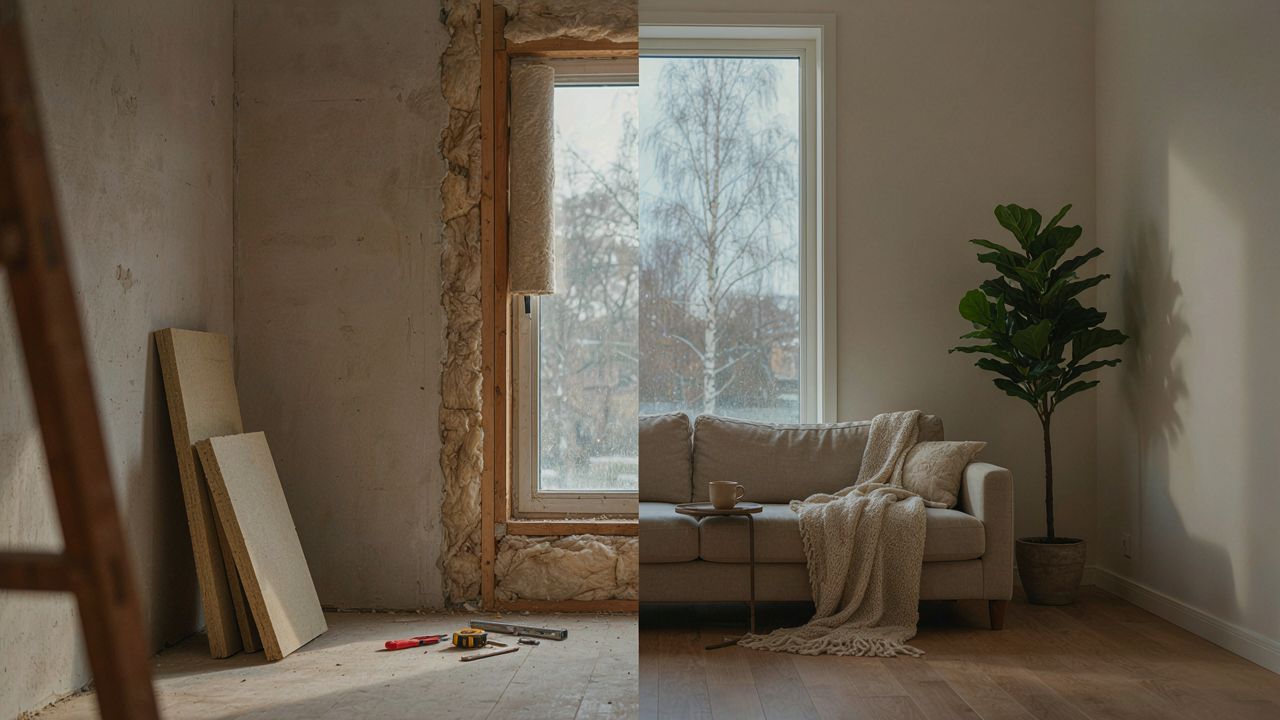
In winter, the temperature in the apartment was 19°C, even though the radiators were running at full capacity. I could feel the cold near the window, the wallpaper was darkening in the corner, and the floor by the exterior wall remained ice-cold. Personal experience showed that before thinking about how to insulate the apartment, one must identify the exact source of heat loss.
Buying insulation without first diagnosing the problem often yields no results. Cold air can seep in through windows, doorways, panel joints, floors, or ceilings. Sometimes the issue lies not with the building envelope itself, but with poor ventilation and high humidity.
First, I ran my hand along the windows, window reveals, the front door, and the exterior walls. I could feel air movement near the bottom corner of the window sash and by the threshold. You can check for gaps using a candle flame, but do so carefully and well away from curtains or flammable materials.
Next, I inspected the corners, the areas behind furniture, and the section of the floor near the exterior wall. A thermal imaging inspection provides the most accurate picture: it reveals cold spots that aren't always visible during a standard check.
A standard exterior wall might feel cool to the touch. However, freezing leads to damp corners, condensation, a musty odor, mold, or peeling wallpaper. The temperature near the wall is noticeably lower than in the center of the room.
I discovered a small dark spot behind a wardrobe. Moving it revealed that air circulation was poor and the wall surface was frequently damp. This indicates a problem with temperature and airflow, rather than just a sensation of cold.
Internal insulation can shift the dew point into the wall structure itself. Moisture accumulates between the wall and the insulation, leading to mold growth and material deterioration beneath the finish. This approach is particularly risky for corner apartments and panel buildings.
Internal insulation should only be installed after a thermal engineering analysis. Success requires a dry wall, a continuous vapor barrier, and the correct finishing materials. Simply gluing insulation boards to a damp wall and covering them with drywall is not enough.
First, I checked the weatherstripping and the tightness of the window sashes. I replaced the old rubber seals, adjusted the hardware, and sealed the gap under the windowsill with an appropriate sealant. If the installation seam has deteriorated or the window reveal is freezing along its entire length, the window will need to be repaired or reinstalled.
A cold reveal often indicates an installation error rather than a defective glass unit. Wallpaper near the frame may get damp due to a gap between the window frame and the wall. In this case, simply replacing a rubber seal won't solve the problem.
For the entrance door, I checked the door fit, hinges, lock, threshold, and the seams around the frame. Adjusting the door leaf, installing new weatherstripping, and insulating the reveals helped. If the door is thin and lets in the cold, installing a second door is sometimes justified.
On the exterior wall and in the corner, look for cracks, damp spots, and sharp temperature drops. Facade insulation and the sealing of inter-panel joints are usually carried out by the property management company or industrial climbers.
| Problem | Possible cause | Solution |
|---|---|---|
| Draft near the window | Worn-out weatherstripping | Replacement and adjustment |
| Damp corner | Freezing or poor ventilation | Wall and airflow diagnostics |
| Cold floor | Basement or gaps in the floor slab | Inspection from below |
| Cold near the door | Loose door fit | Adjustment and sealing |
For the initial work, I needed a screwdriver, a utility knife, a brush, a degreaser, new weatherstripping, and sealant. I cleaned and dried the surfaces, replaced the damaged sections, and checked the sash compression using a sheet of paper. If the sheet pulls out easily while the window is closed, the compression needs adjustment.
Gaps between the frame and the wall should not be sealed with just any random material. First, you need to identify where the installation joint has failed, then use a suitable sealant or contact to a window specialist. After the repair, I checked the window again on a cold day.
Cold air often enters through the bottom seal of a balcony door. I adjusted the hinges, replaced the weatherstripping, and inspected the gap between the door frame and the wall. A balcony should not be converted into a living space without complying with building codes and regulations.
Heavy curtains reduce the chill radiating from the glass, a rug makes a cold floor more comfortable, and a reflective screen behind the radiator directs some heat back into the room. These measures are inexpensive, but they do not fix wall freezing, poor window installation, or facade defects.
Exterior insulation protects the wall from freezing and does not reduce the room's usable area. It is a suitable solution for a cold corner apartment, provided an inspection has confirmed the cause of the problem. Work at heights should not be attempted by a DIYer.
First, contact your property management company to clarify the approval process. The facade, inter-panel joints, and exterior cracks are the building's responsibility or require specialized work.
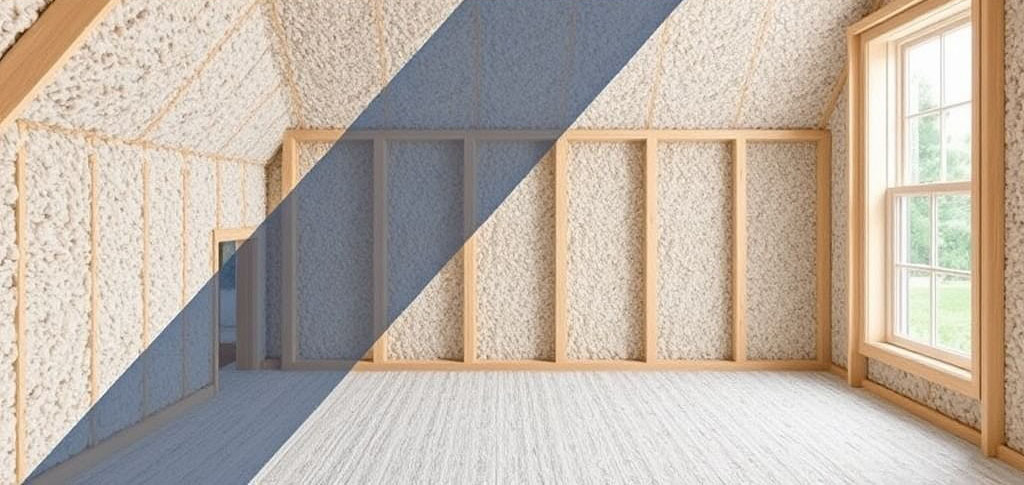
This option is considered if the facade is inaccessible, the building is subject to heritage preservation restrictions, or exterior work failed to solve the problem. The wall must be dry, and the vapor barrier layer must be continuous, with no gaps at the floor, ceiling, or window reveals. A mistake at a single junction can lead to moisture accumulation behind the finish.
For ground-floor apartments, it is worth checking the cold basement and the floor slab. On the top floor, the cause might be a drafty attic or uninsulated roofing.
Insulating from the basement or attic side is usually more effective than applying a thin layer of material inside the room.After sealing the windows, air circulation worsened, so I began monitoring humidity levels more frequently. Ventilation ducts remove water vapor, odors, and some pollutants. You must not cover the vents, seal the openings, or connect incompatible equipment to them.
You can check the airflow by holding a thin strip of paper near the vent; using an open flame for this test is not recommended. If there is no draft, you should have the duct inspected by your property management company.
A room thermometer and hygrometer help visualize the relationship between cold and moisture. I took readings in the morning and evening and inspected corners, window reveals, and the space behind the wardrobe. Regular airing out should complement insulation, not replace it.
Avoid pushing large furniture right up against an exterior wall. Leave a gap for air circulation, keep radiators unobstructed, and periodically check hidden areas. This makes it easier to spot condensation before mold develops.
Before the work began, I recorded the temperature in each room, readings near the exterior wall, humidity levels, and drafty spots. After the renovation, I took measurements at the same times and under similar weather conditions. While a subjective sense of warmth is useful, it isn't enough on its own.
A successful outcome is indicated by the disappearance of drafts, even heating throughout the rooms, dry window reveals, and the absence of a musty odor. If a corner dried out for a week but then got wet again, the underlying cause remains.
Work on high-rise facades, modifications to load-bearing structures, relocating radiators, altering heating systems, and work involving gas equipment or building-wide utility systems require specialized professionals and official approvals. A mistake could damage your apartment and neighboring units. First, make a list of defects, then commission a professional assessment of the specific area.
What actually helped insulate the apartment? My approach was simple: first, identify heat loss points; then, seal windows and doors; and finally, inspect the walls, floors, ceilings, and ventilation. The most noticeable improvements came from ensuring window sashes closed tightly, installing new weatherstripping, and sealing gaps. Heavy curtains and a rug added comfort but were no substitute for proper repairs.
There is no one-size-fits-all method for insulating an apartment. Do not start by buying insulation materials, do not block ventilation, and be cautious with interior thermal insulation. Document the apartment's condition before starting work, take measurements again after the repairs, and leave high-altitude or hazardous tasks to the professionals.
Previous article
What Is a Home Renovation Loan: How to Calculate Payments and Avoid Overpaying
Next article
Interview with a Real Estate Agent: How to Sell an Apartment Quickly Without an Unnecessary Discount
Want to stay up-to-date on all the latest news in construction, design, renovation, and energy efficiency? Subscribe to the Kedr News Telegram channel.
 subscribe