admin
2026-04-25 | 0 comments
Share this:
Gas and electricity prices are rising in Ukraine. Many families spend huge amounts of money on heating their homes. But what if the building is insulated correctly? This will save up to 40% of heat. But insulation errors remain common. Even with new technologies, people miss key points.
In 2026, the State Building Regulations will be tightened. Now they require more attention to energy efficiency. We will figure out how to avoid losses and make your home cozy.
House design is the basis of everything. Without it, insulation is weak. The climate in Ukraine varies: in the north, frosts reach -20°C, in the south it is milder. Ignoring these details leads to significant costs.
A thermal calculation shows how much heat will escape through the walls. The R-value is the thermal resistance. For Ukraine, it should be at least 3.5 m² K/W in the central regions. Without calculations, corners and joints become thermal bridges. Cold penetrates through them like a thin door.
Imagine: you insulate the walls, but forget about the window openings. The wind blows, the heat escapes. In 2026, new DBN standards require precise calculations. Use programs like TEPLA or Therm. They model losses. Run a simulation before work. This will save you from excess energy consumption.
Insulation materials are different. Mineral wool is good for wall breathing. Expanded polystyrene (EPS) is cheap, but flammable. XPS is stronger for floors. PIR is light and warm for roofing. In the Ukrainian winter, thickness is important. For a facade in Kyiv, you need at least 150 mm of wool.
People often take a thin layer to save money. But this is a mistake. Heat escapes, bills rise. The Institute of Building Physics recommends: in the north - 200 mm of XPS for ceilings. Compare: wool with a density of 30-50 kg/m³ for walls, 100 kg/m³ for roofs. Choose according to the location. Check frost resistance certificates.
Walls must breathe. Moisture from the room escapes. If the layers do not allow vapor to pass through, condensation accumulates inside. The insulation gets wet and loses its properties. It's like a thermos: it retains heat, but mold grows.
A vapor barrier is needed inside, and a windproofing system outside. The mistake is to install a vapor barrier everywhere. In the cold climate of Ukraine, this leads to destruction.
Example: a house in Lviv. The owner completely covered the cotton wool. A year later, the walls are damp, the heat is escaping. Install the membranes correctly. Check the vapor permeability coefficient - it should decrease from the inside to the street.
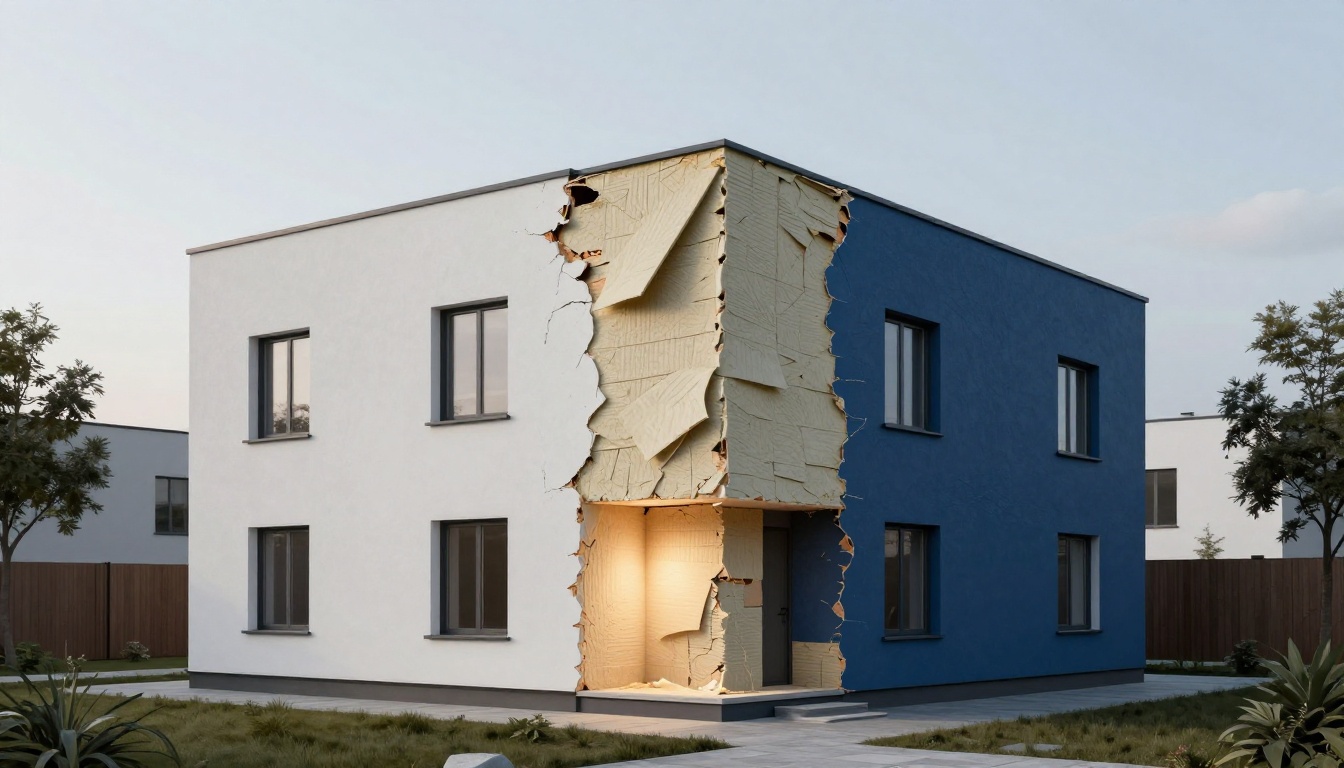
The facade is the main protection from the cold. ETICS systems are popular in Ukraine. But installation is everything. Poor workmanship - and the slabs will fall off.
Preparation of the base is the key. Dust, moisture, and uneven surfaces interfere with adhesive bonding. In ETICS, adhesive is applied in dots and strips. Use 5-6 dowels per slab, 50 mm deep into the wall. Weak spots tend to peel off after frost or wind.
Pre-work checklist: clean the wall with a brush. Check the humidity - no higher than 5%. Apply primer. Test adhesion: glue a test piece. Check the dowels for frost resistance in 2026. This will prevent the slabs from falling.
The reinforcing mesh holds the plaster. It should be buried in adhesive by 1-2 mm. Fiberglass mesh is alkali-resistant. Regular mesh rusts from the cement.
Incorrect application causes cracks. "Spiderweb" appears due to temperature fluctuations.
Example: in Odessa, a façade cracked after two years. The mesh came out. Apply layer after layer: glue, mesh, finish. Wait 24 hours between layers. Use ready-made systems from one brand.
Joints are weak points. Windows, balconies, and ventilation let in cold. Without sealing, 20% of heat is lost. Use a baseboard profile and foam for slopes.
Mistake: forgetting about the corners of the balconies. In Kyiv, wind increases losses. Fill the seams with silicone sealant. For ventilation, use special cuffs. Check everything with a thermal imager after installation. This will find cold bridges.
The roof and floor are big sources of losses. In Ukraine, snow lasts for months. House insulation is critical here.
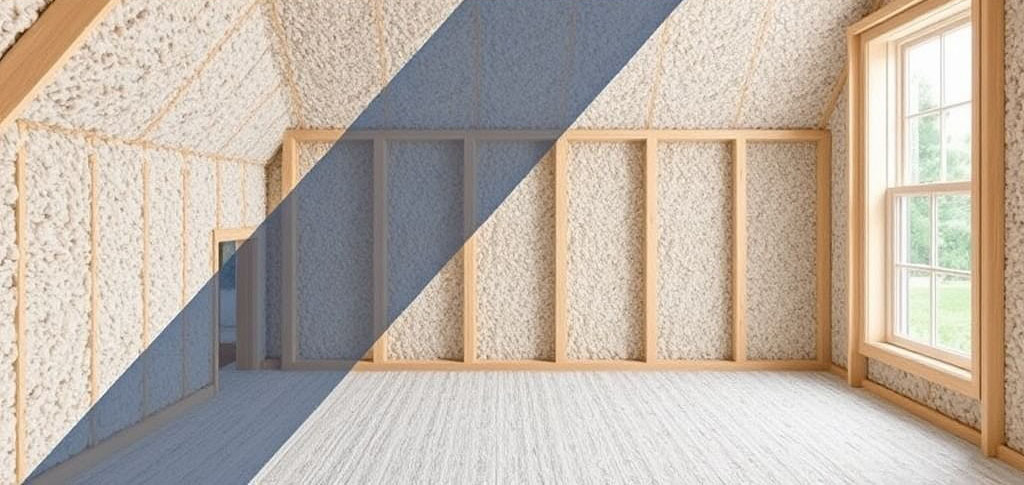
For a cold attic, insulate from below. Cotton wool or slabs between the beams. The attic requires insulation of the rafters. The main mistake is to close the vapor barrier.
The vapor barrier membrane comes from the room side. It doesn't let the vapor in. Without it, condensation will destroy the wood. Place it correctly: glue the joints. Leave 50 mm gaps for ventilation. This will ensure dryness.
A flat roof needs a slope of 2-5%. Water must drain. XPS as a base is good, but without waterproofing it will get wet. Lay the vapor barrier under the carpet.
Problem: uneven slope. Standing water destroys the layers.
Example: a roof in Kharkov collapsed from puddles. Install drainage. Glue the layers with a 100 mm overlap. Check for leaks.
The floor above the basement loses 15% of its heat. Lay insulation boards under the screed. Gaps are the enemy. Expanded polystyrene attracts rodents if left unprotected.
Fill all cracks with polyurethane foam. Use dense XPS 50 kg/m³. In the southern regions, 100 mm will be enough, in the north - 150 mm. Add a barrier from mice - a mesh.
Technology is no joke. The slightest violation - and the work is wasted.
Glue and plaster love heat. Temperature from +5°C to +25°C. Humidity below 80%. Rain will wash away everything.
The weather in April 2026 is capricious. Work in dry weather. If it is cold, use heaters. High humidity slows down hardening. Wait until it dries - up to 48 hours.
The sun spoils polystyrene foam - it turns yellow. Store wool in a dry place. Wet insulation loses 50% of its properties.
Store under a canopy. Do not drop the slabs. Before installation, check for moisture with a tester. This will preserve the quality.
Glue from one, plaster from another - there is a risk. They will not adhere. Buy factory kits.
Manufacturers only provide a warranty on their own.
Example: mixed materials peeled off in Dnipro. Read the instructions. Test on a small area.
House insulation mistakes in Ukraine in 2026 are costly. The most fatal ones are: ignoring calculations, cold bridges, and vapor barrier violations. They steal heat and money.
Invest in design and professionals. Certified contractors know the State Building Norms (DBN). Saving on cheap materials will pay off with repairs. Make your home warm - your bills will drop. Contact the specialists now. Your comfort is worth it.
Previous article
Insulating your balcony: make it comfortable all year round
Next article
What are the highest-paying professions in Ukraine's real estate sector: Market analysis and prospects for 2026?
Want to stay up-to-date on all the latest news in construction, design, renovation, and energy efficiency? Subscribe to the Kedr News Telegram channel.
 subscribe