admin
2026-11-26 | 0 comments
Share this:
Contents
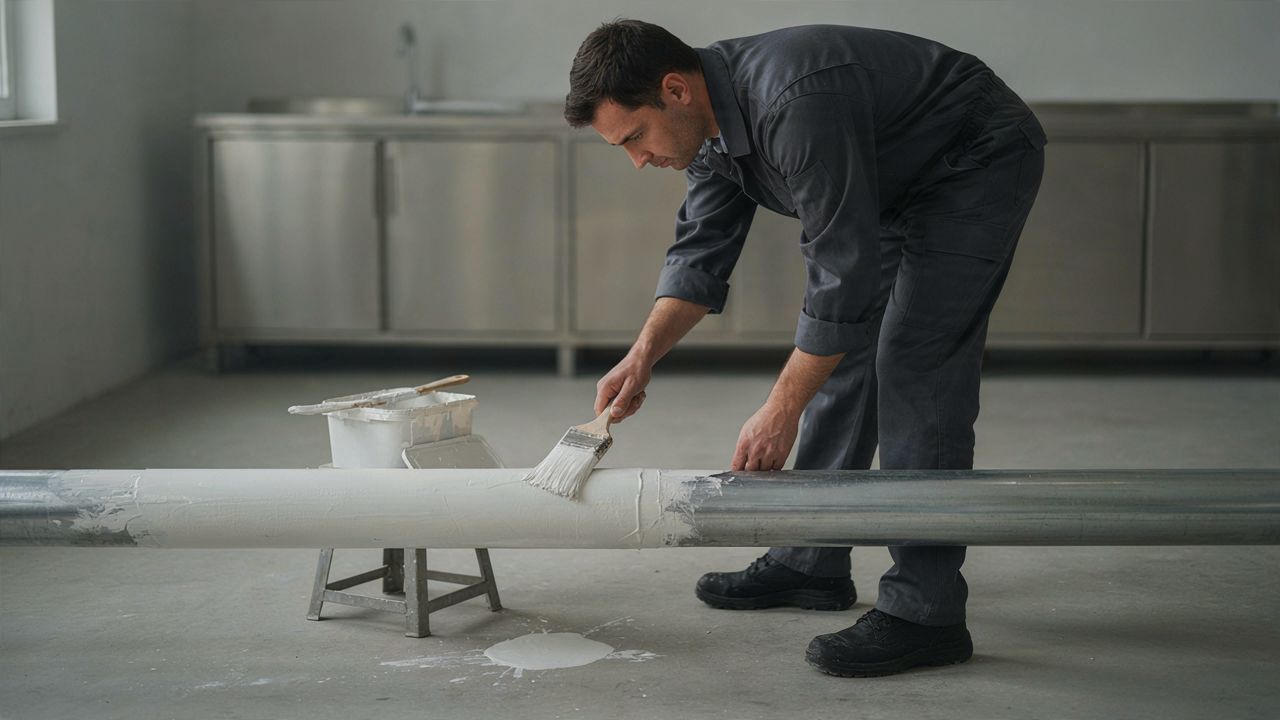
It is often difficult to cover a pipe located behind a wall with a thick layer of conventional insulation, and there may not be enough space on a building facade for additional cladding. In such cases, liquid ceramic thermal insulation is an option: the coating can be applied using a brush, roller, or sprayer, even to surfaces with complex shapes.
However, a thin layer of this "paint" is not equivalent to a thick layer of traditional insulation. The properties of the coating depend on its composition, thickness, the substrate to which it is applied, and the operating conditions. We will examine where it can be effective, and which claims should be verified through technical documentation and actual measurements.
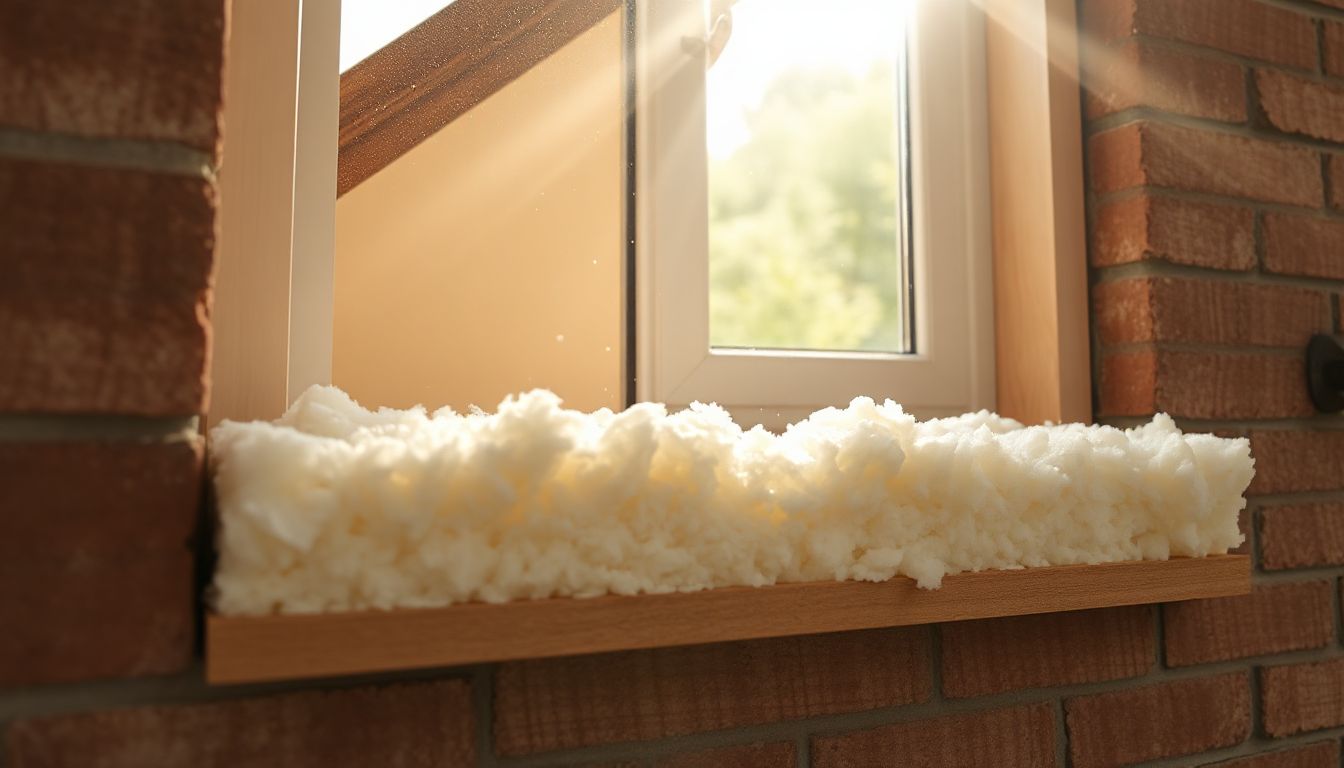
The term "liquid ceramic thermal insulation" is often associated with the presence of ceramic microspheres in the product's composition. Yet, the mere inclusion of such a filler does not guarantee the claimed level of performance; what truly matters are the test results for the finished product and its suitability for the specific conditions in which it will be used.
Typically, the composition includes a binder, fillers, and various additives.
Some products incorporate hollow ceramic or glass microspheres. The binder forms a film and ensures it adheres to the substrate, while the fillers influence the coating's properties.Formulations vary between brands. In a study of liquid coatings containing ceramic microspheres, the author noted that thermal conductivity data provided by manufacturers can differ significantly, as results depend on both the testing methodology and the specific sample. Consequently, figures for one product cannot be generalized to all such coatings.
A coating adds a thin layer to a surface, providing its own thermal resistance. While it may alter the surface temperature or reduce localized heat exchange, the actual effect depends on the substrate material, the coating thickness, and the surrounding environmental conditions. When it comes to reflecting thermal radiation, the specific optical properties of the coating are what matter—not just the word "ceramic" on the packaging.
Reducing heat loss, protecting against solar heating, and addressing "thermal bridges" (cold bridges) are distinct challenges. Thermal bridges are often associated with structural junctions, seams, or highly conductive elements. A thin coating does not always eliminate the root cause of these issues and generally cannot serve as a substitute for bulk thermal insulation.
Request the technical data sheet and the application instructions. Check for specifications such as thermal conductivity, recommended thickness, coverage rate, operating temperature range, vapor permeability, adhesion, and the stated service life. Also, clarify whether the reported values refer to the material in its dry state or to the layer as it exists after application.
The testing method and conditions are significant. For instance, the standard DSTU B V.2.7-105-2000 outlines the procedure for determining thermal conductivity and thermal resistance under steady-state heat flow conditions. Compare results only under similar conditions and with due regard for the thickness of the sample; testing the material itself does not prove the effectiveness of the entire structure.
The primary advantage of this coating is its ability to be applied to uneven surfaces and areas that are difficult to access. This can simplify work in places where installing slab or roll-type insulation is challenging. However, the suitability of the material must be evaluated on a case-by-case basis for each project.
On pipes and fittings, the coating is convenient to apply around mounts, bends, and connections. It may be a suitable choice when conventional insulation is difficult to fit or when it obstructs access to equipment. Select a product based on the pipe temperature, the substrate material, humidity levels, and operating conditions.
Before purchasing, verify whether the coating is designed for interior or exterior use. For hot pipes, the permissible operating temperature and the layer's resistance to heating and cooling cycles are critical. If the goal is to reduce heat loss in a piping system, compare the expected outcome against that of traditional pipe insulation.
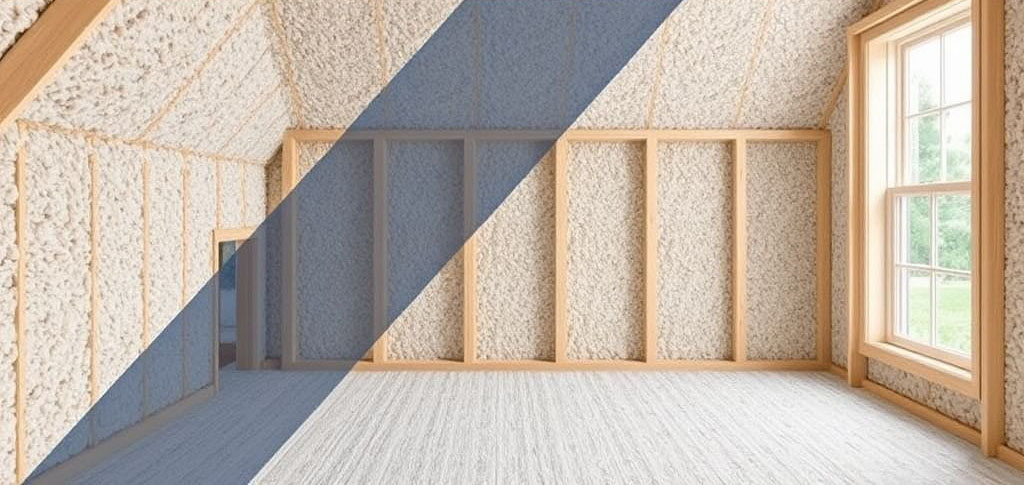
On walls, the coating is used when the installation of standard, full-scale insulation is difficult. However, the structure must first be assessed in its entirety—including its heat loss, moisture dynamics, ventilation, and the condition of its exterior layers.
A change in surface temperature alone is not sufficient to confirm that a building meets the required level of thermal protection.During the design and renovation of buildings, the standard DBN V.2.6-31:2021 "Thermal Insulation and Energy Efficiency of Buildings," which has been in effect since September 1, 2022. It regulates not only the effective thermal resistance of building envelopes but also their hygrothermal (heat and moisture) performance, air permeability, and other conditions. In cases involving dampness, it is essential to identify and eliminate the source of the moisture rather than simply covering it up with a new layer.
On metal tanks, a coating can be used to protect the surface from heating or cooling, or as part of a corrosion protection system. The effectiveness depends on the equipment's operating mode and specific requirements. Always verify compatibility with the metal substrate, the primer, and any topcoat.
If an object is subject to specific requirements regarding fire safety, temperature, or service life, select a material based on the project specifications and verified technical data. In such cases, a promotional brochure alone is not sufficient.
First, determine exactly what you need to change. Next, assess the operating conditions, and only then compare the available materials. This approach helps you avoid paying for unnecessary properties and prevents unrealistic expectations regarding the coating's performance.
Do you need to reduce heat loss from a pipe, limit the heating of a roof, lower the risk of condensation, or insulate a complex area where bulky traditional insulation cannot be used? Each objective requires specific data and a corresponding method of verification. For instance, when addressing condensation, factors such as surface temperature, air humidity, and... ...room ventilation.
Describe the substrate, operating temperature, and application conditions to the seller. If the application is on a wall, specify the composition of the entire structure, not just the material of the outer layer. This information will help in selecting the right product and determining whether a formal calculation is required.
Request the technical data sheet, application instructions, and test reports. Verify who conducted the testing, the methodology used, and the thickness and temperature of the test specimen. Specifically, confirm that the documentation validates the exact property you require—such as thermal conductivity, heat resistance, or adhesion.
Standards like DSTU B EN 12667:2016 and DSTU EN 12664:2022 can serve as benchmarks for evaluating thermal conductivity data, provided the method is appropriate for the specific material and application. It is important to look beyond just the numerical value; consider the test specimen, measurement conditions, and the intended scope of the results. For buildings, the performance of the entire structure should also be assessed against current regulatory requirements.
The price per package does not reflect the total cost. Factor in substrate cleaning and preparation, priming, consumption rates for each layer, the number of layers, and any necessary protective coatings. Compare complete systems based on both total cost and expected outcome.
It is advisable to request a consumption calculation for your specific surface area. If a contractor cannot explain the intended layer thickness or how it will be verified, it will be difficult to assess the quality of the work.
Even a suitable material may underperform due to poor surface preparation or improper application techniques. The manufacturer specifies the exact conditions, which vary depending on the product's composition and application method. Do not apply instructions for one brand to another—
...another.Remove dust, grease, rust, and any loose or unstable old layers. Verify that the surface is dry and structurally sound, and ensure that the primer and coating are compatible with the substrate. Metal and plaster surfaces may require different preparations and types of materials.
Mix the material according to the instructions before use. Use the recommended tools, adhere to the specified layer thickness and drying times, and ensure that the ambient temperature and humidity are within the permitted range. Do not apply the next layer before the recommended time has elapsed.
Monitor the consumption rate and ensure the surface is coated evenly. Pay special attention to joints, corners, fasteners, and hard-to-reach areas. Gaps or overly thin spots can diminish the coating's effectiveness, while excessive thickness does not necessarily improve the result.
The primary limitation stems from the material's minimal thickness. In cases of significant heat loss, a thin layer may fail to provide the required thermal resistance. For walls and other building envelopes, the entire system must be evaluated, rather than focusing solely on the coating itself.
Before starting, document the initial conditions and select a specific criterion for evaluation—such as surface temperature, the presence of condensation, or energy consumption. After application, repeat the measurements under comparable conditions (air temperature, humidity, load, and equipment operating mode). Otherwise, any observed differences might be due to changes in weather or other external factors rather than the coating itself.
For critical applications, test the material on a small area first. In a building or industrial facility, the expected outcome should be verified through calculations or controlled measurements.
Ask for clarification on the following:
Clear answers will help you compare different offers and understand exactly what results the contractor is promising.
Liquid ceramic thermal insulation can be effective for specific applications. Such coatings are convenient to apply to pipes, fittings, and other complex-shaped surfaces. However, they are not a universal substitute for conventional insulation and do not guarantee the elimination of thermal bridges or condensation. The final result depends on the product's composition, the applied thickness, the nature of the substrate, and the operating conditions.
Before making a purchase, define your objectives, review the technical documentation, and compare the total cost of the complete system. For large-scale projects, test the coating on a small area first, or have a specialist verify the proposed solution through calculations.
Previous article
House foundation repairing: how to identify the cause and choose a safe restoration method
Want to stay up-to-date on all the latest news in construction, design, renovation, and energy efficiency? Subscribe to the Kedr News Telegram channel.
 subscribe