admin
2026-09-04 | 0 comments
Share this:
An apartment can be cold even when the outside temperature is moderate. Heat escapes through windows, cracks in doors, external walls, balconies, and poor ventilation.
Insulating your apartment yourself helps eliminate obvious losses without extensive renovations. After such work, rooms become more comfortable, and heating is used more efficiently.
Below is a clear plan for homeowners in Ukraine. It begins with identifying problem areas and ends with a heating inspection. Work on the façade, gas equipment, electrical wiring, and other major structures should be left to specialists.
Insulating an apartment in Ukraine shouldn't start with purchasing materials. First, inspect the room and identify areas where cold air is leaking or moisture is accumulating. This approach helps avoid wasting money on unnecessary insulation.
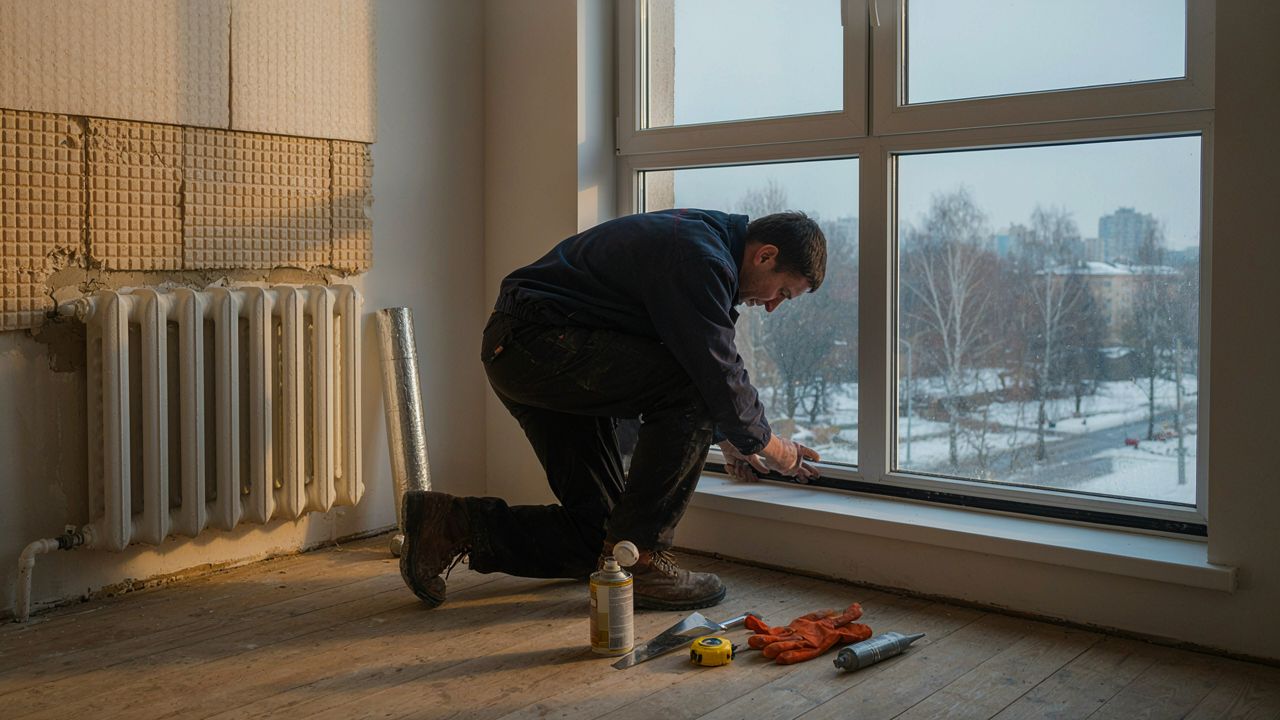
Walk along the window frames, slopes, sills, and the joints between the glass units. Check the outside corners, wall areas near radiators, the balcony door, the front door, and the floor near the exterior walls.
Drafts can be detected with your hand or a thin strip of paper. Flames should only be used very carefully, away from curtains, furniture, and other flammable materials. When in doubt, choose paper.
The problem is indicated by cold spots on the walls, damp corners, dark spots near window sills, fogged windows, and peeling wallpaper. Mold often develops where air circulation is poor and the surface remains damp.
Mold should not be covered with paint or new wallpaper. First, remove the source of moisture, clean and dry the surface, and then establish ventilation.
Divide tasks into quick seasonal fixes and more extensive repairs. For starters, you may need weatherstripping, acrylic or silicone sealant, foam, door insulation, heat-reflective screening, and window sill materials.
Before purchasing, check the compatibility of the product with plastic, plaster, metal, and painted surfaces. This is especially important for sealants and primers: the wrong material can ruin the finish.
Windows are often the main source of drafts. Insulating windows yourself reduces heat loss, but won't replace a faulty double-glazed window or repair a damaged mounting seam.
The old seal becomes hard, cracks, deforms, and adheres less well to the frame. Remove it, clean the groove of dust and material residue, then install a new one without stretching it.
After installation, close the sash and check the seal with a strip of paper. If it comes out easily, the hardware or new seal requires further inspection.
Small cracks around the frame, window sill, and reveals can be sealed with a suitable sealant. The surface must be dry, clean, and free of grease. Protect adjacent areas with masking tape before application.
Do not block the drainage holes at the bottom of the window profile. They drain water, and sealing can lead to moisture accumulation inside the structure.
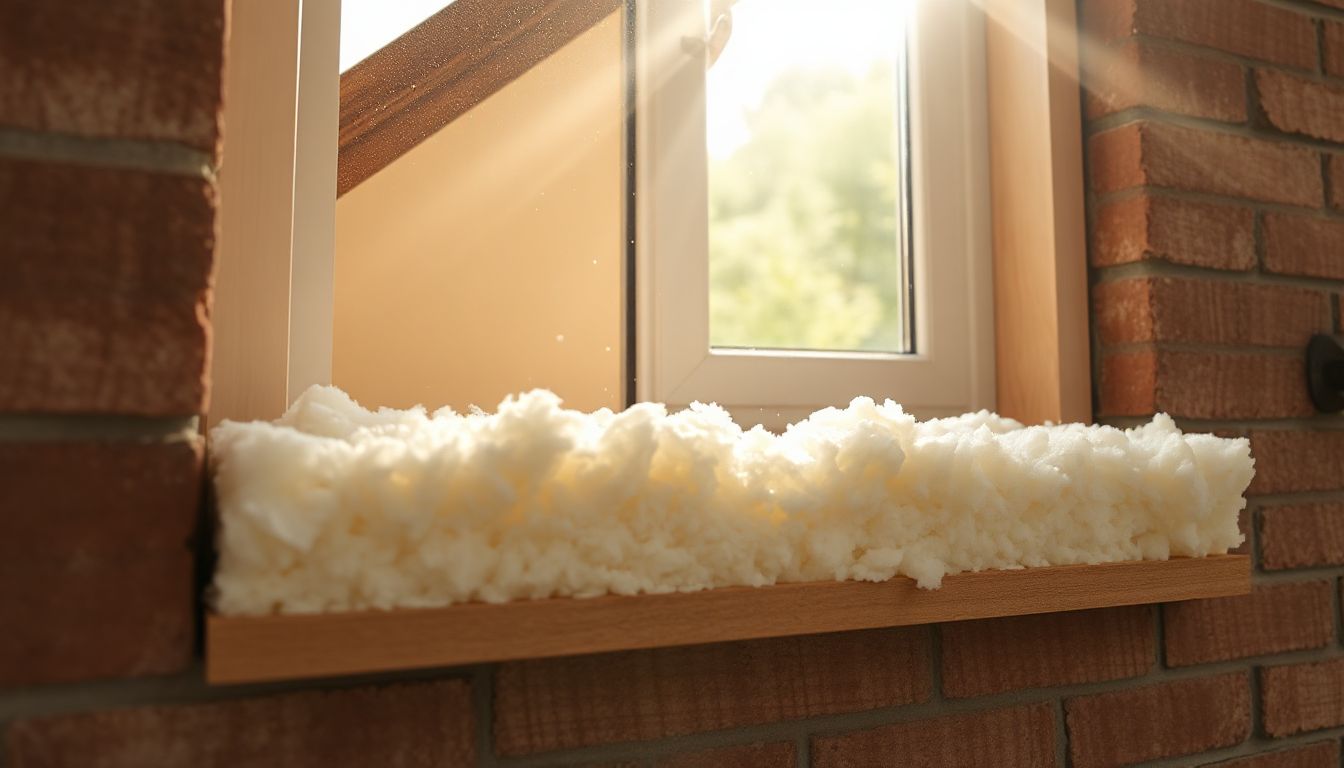
The mounting foam should not be left exposed. Moisture and sunlight destroy it, so the foam is covered with plaster, panels, or other finishing materials.
Even warm windows won't provide the desired effect if cold air enters through the balcony door or entryway. Insulating the balcony door and entryway in an apartment often produces quick results.
Check that the sash fits evenly around the entire perimeter. Adjust the hardware carefully and only according to the manufacturer's instructions. Typically, you need a hex key for this.
Too much pressure accelerates wear of the seal and makes it difficult to open. After adjustment, the door should close without jerking or excessive force.
Choose a seal based on the gap width and the shape of the door frame. Clean the surface of dust and grease, glue or fasten the material along the entire contour, then test the closing.
If the door has to be pushed hard, the seal is too thick. It should not interfere with the lock, ventilation gaps, or free exit from the apartment.
Self-adhesive materials, insulating panels, and door rollers are suitable for the door leaf. A damaged or too-low threshold should be replaced if cold air is leaking through the bottom gap.
After work, the door should close easily. Check that the insulation does not interfere with the lock or block the manufacturer's openings.
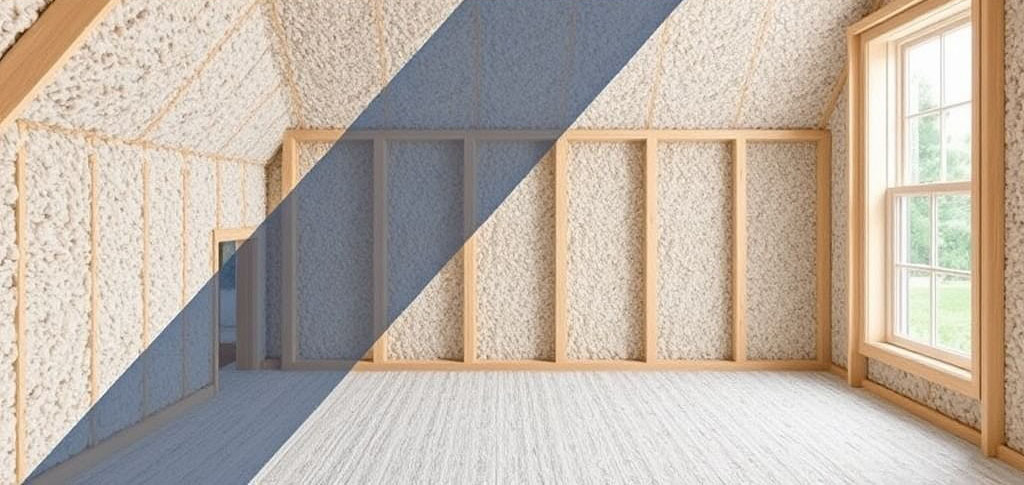
Inside the apartment, you can repair small cracks and improve the radiator's heat output. Complete internal insulation of the external wall requires careful consideration: a shift in the dew point can lead to moisture and mold growth within the structure.
A heat-reflecting screen behind the radiator reduces heat gain on the external wall. It is placed behind the radiator with a small gap, leaving the unit itself and the airflow free.
Do not block the thermostat, pipes, or areas needed for maintenance with the screen. This method works locally and does not replace insulating the entire wall.
Surface cracks and joints are repaired after the cause of freezing has been eliminated. If you first seal the defect and then leave the cold structure, dampness may return.
Antifungal primer is applied only after mold has been removed, cleaned, and completely dried. It does not replace leak repair or ventilation restoration.
Insulating the exterior wall of an apartment building changes the appearance of the facade and may affect common property. Different cities in Ukraine have their own regulations for such work.
Before insulating the facade, check the requirements for your specific building and locality. It's best to entrust installation to a specialized team who will assess the wall and select the right system.
A sealed apartment requires adequate air exchange. Completely blocking ventilation increases humidity, condensation, and the risk of mold. Gas systems cannot be repaired or adjusted independently.
Remove thick curtains, furniture, and decorative panels that cover the radiators. Radiators need free air circulation; otherwise, heat is trapped against the wall and is poorly distributed throughout the room.
If you experience uneven heating, noise, or leaks, contact your property management company or call a specialist. Do not attempt to disassemble the heating unit yourself.
Remove the ventilation grille, remove any dust, and reinstall it. The draft can be tested with a strip of paper near the grille. Do not use an open flame for this purpose.
If the paper is not drawn in or the duct is unsteady, do not block it or connect a powerful fan without checking the system. The cause must be determined by a specialist.
Constantly fogged windows indicate excess moisture or poor air exchange. Ventilate the rooms briefly and intensively, monitor humidity, and keep the ventilation ducts open.
If dampness persists, look for a leak, faulty ventilation, or frozen structure. Over-sealing the room will exacerbate the problem.
After the work, repeat the inspection in cold weather. This will help you understand which measures have improved the apartment's energy efficiency and where repairs are needed.
Check the windows, doors, balcony unit, slopes, outside corners, and the floor near the walls. Compare their condition with what it was before the renovation, but do not take the subjective feeling of warmth as an accurate measurement.
Over the next few weeks, monitor the corners, slopes, and walls. If dampness or mold returns, check for leaks, ventilation, and the condition of external structures.
Independent measures are not enough if the entire external wall is frozen, Mold reappears, the façade is damaged, or a double-glazed window needs replacing. A specialist is also needed for faulty heating systems, gas and electrical problems, and serious leaks.
A warm apartment starts with eliminating losses, not adding excess insulation. The five steps are as follows: find sources of cold, seal windows, eliminate drafts through doors and balconies, carefully treat problem areas of the walls, and then check the heating and ventilation.
Most often, new weatherstripping, repairing slopes, sealing cracks, and unclogging radiators produce quick results. This helps save heat without major renovations.
Start with an inspection of the apartment and a short list of priority tasks. Entrust the façade, gas equipment, electrical work, and structural defects to qualified specialists.
Next article
Which real estate assets are subject to accelerated depreciation: how to reduce tax risks and confirm rights in tax accounting
Want to stay up-to-date on all the latest news in construction, design, renovation, and energy efficiency? Subscribe to the Kedr News Telegram channel.
 subscribe