admin
2026-10-22 | 0 comments
Share this:
A stuffy bedroom, fogged-up windows, and lingering odors are often signs of poor air exchange. Condensation and mold can also be linked to ventilation issues, though sometimes the root cause lies in leaks, inadequate insulation, or insufficient heating.
This problem is increasingly common in modern homes, where airtight windows prevent air from seeping in through gaps. Meanwhile, daily activities like cooking, showering, and drying laundry add moisture to the indoor environment. In this guide, we will explore how to select a ventilation system for a home in Ukraine, how to plan airflow, and what to check after installation.
Ventilation supplies fresh air while removing excess moisture, odors, and pollutants. It helps maintain a comfortable indoor climate, though it cannot replace the need to fix leaks, improve insulation, or adjust heating systems.
Ukrainian building codes also categorize home ventilation as an essential system for maintaining a proper indoor climate and ensuring building safety.If a room feels stuffy, odors linger for hours, or condensation regularly appears on windows, it is time to check the air exchange. Excess moisture can settle on cold surfaces, creating conditions for mold growth. However, the presence of mold does not automatically mean the ventilation system is at fault; you must identify the source of the moisture and assess the condition of the walls, roof, windows, and plumbing.
Cooking, taking hot showers, cleaning, and drying laundry all increase indoor humidity. Be sure to use your kitchen exhaust hood while cooking, keep the bathroom door closed when showering, and ensure that ventilation grilles remain unobstructed. If a room is frequently occupied by many people, it will require more frequent airing out.
Older window frames often allowed air to seep in through gaps—though this airflow was uncontrolled. Installing airtight windows reduces this influx, which can impair the effectiveness of natural ventilation systems.
Ventilating a room by opening windows or vents helps refresh the space quickly, but it is not always a substitute for a continuous, systematic exchange of indoor and outdoor air.The primary options include natural ventilation, mechanical exhaust, and balanced (supply-and-exhaust) ventilation systems. The best choice depends on factors such as the home's layout, the number of occupants, the airtightness of the windows, the number of stories, the presence of chimneys, and the available space for air ducts. Guidelines from Health Canada on residential ventilation also note that the selection of a system depends on the specific characteristics of the building, its occupants, and the available budget.
In a natural ventilation system, outdoor air enters through designated openings or windows, while warm indoor air exits through exhaust ducts. Airflow (draft) fluctuates based on weather conditions, wind, temperature differences, and the condition of the ducts. Consequently, the same duct might perform well in the winter but less effectively during warmer weather.
An exhaust fan in a bathroom helps clear steam and odors, while a kitchen range hood—provided it is connected to an external vent—removes pollutants generated near the stove. However, air that is exhausted must be replaced; without a planned supply of fresh air, an exhaust system may function poorly or disrupt the airflow in other ventilation ducts.
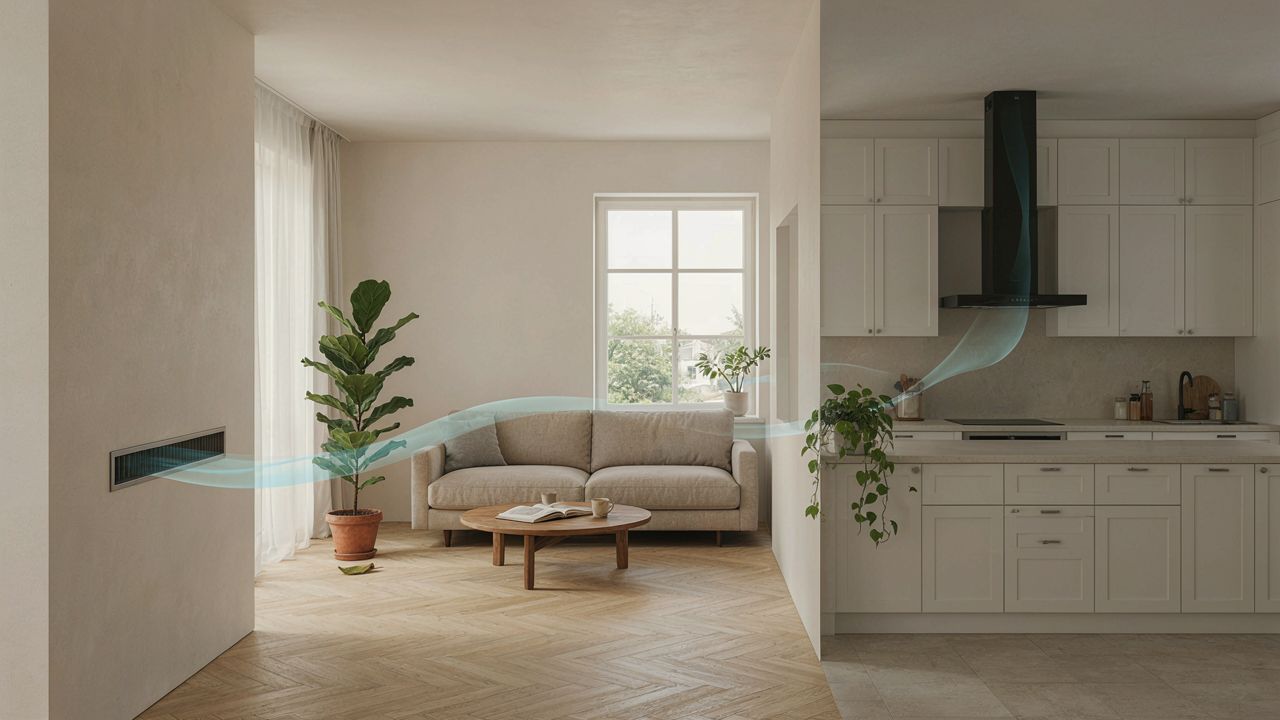
This is especially important to consider in a home with gas appliances, a fireplace, or a stove.This system mechanically brings outdoor air into living areas while removing stale air from the kitchen and bathrooms. A heat recovery unit (recuperator) transfers some of the heat from the outgoing air to the incoming air, reducing heat loss during air exchange. Such a system requires professional calculation, dedicated space for equipment, airflow balancing, and access for maintenance.
A well-thought-out design directs air from living spaces toward areas where moisture and odors are generated. This prevents scenarios where a fan is installed, yet fresh air fails to reach bedrooms or living rooms. It is best to plan the routing of air ducts, power supply, and equipment placement before starting any finishing work or renovations.
Supply vents are typically installed in bedrooms and common areas in the rooms, while exhaust vents should be located in the kitchen, bathroom, and toilet. A path for airflow between these areas is necessary—for example, a gap under the door or a transfer grille. The chosen solution should balance airflow with noise control and privacy, ensuring that air can circulate without allowing sounds from adjacent rooms to become a disturbance.
First, determine the intended purpose of each existing duct and where it leads. You must never combine a ventilation duct with a chimney or block it off. If the house contains a gas appliance, a stove, or a fireplace, the system layout must be reviewed by a professional; a powerful exhaust system operating without sufficient air intake can compromise draft and safety.
Before installation, decide where the fans and the main ventilation unit will be placed. Check the noise levels, ensure easy access to filters, and verify that grilles and air ducts can be cleaned. Requirements regarding access, noise, and energy efficiency can be found in the building code DBN V.2.5-67:2013 "Heating, Ventilation, and Air Conditioning";
The relevance of specific standards and their applicability to a given property should be clarified during the design phase.A reliable installation begins with an assessment of the home: a specialist examines the layout, windows, ventilation ducts, sources of moisture, and available space for equipment. They then calculate the required air exchange, select an appropriate system, and test it following installation. For complex configurations, multi-story homes, or houses with gas appliances, a professional design and a qualified installer are particularly important.
Verify where exhaust ducts lead, ensure they are free of blockages, and confirm that there is a clear path for fresh outdoor air to enter. Do not attempt to dismantle shared building ventilation ducts or chimneys yourself. If the draft is weak or air is flowing in the wrong direction, the issue must be investigated first—simply installing a more powerful fan is not the solution.
A fan cannot provide effective air exchange without a corresponding supply of fresh air. An overly powerful unit may generate excessive noise, alter air pressure within the home, and interfere with the operation of other ventilation ducts. Equipment capacity should be selected based on the specific room, the length and configuration (bends) of the air ducts, and the resistance created by the ventilation grilles.
When the system is handed over, check the direction of airflow, the operation of the fans, noise levels, and accessibility to filters. For precise adjustment, a specialist should measure the airflow using appropriate instruments, rather than relying on a subjective assessment at the grille. Ask to be shown how to activate the high-intensity mode and learn the maintenance schedule for the equipment.
Even a correctly installed system requires ongoing maintenance. Dust on grilles, a clogged filter, or an obstructed air intake can reduce airflow and increase noise levels. The frequency of maintenance depends on the type of system, conditions within the home, and the manufacturer’s recommendations.
Pay attention if windows frequently fog up, odors linger longer than usual, or dampness appears in corners. A single sign does not necessarily indicate a ventilation malfunction, but recurring symptoms are a reason to inspect both the system and the source of moisture. If a wall is leaking or freezing, address the root cause first; ventilation alone will not solve the problem.
Remove dust from accessible grilles, and clean or replace filters strictly as directed by the manufacturer. Do not block ventilation openings with furniture, and avoid using cleaning agents that could damage the unit’s housing or filters. If contamination is present inside the air ducts or the ventilation unit itself, do not attempt to substitute professional cleaning with household chemicals.
Contact a specialist if airflow weakens, air begins flowing into a room from an exhaust vent, persistent dampness develops, or the equipment becomes noticeably louder. A professional inspection is also required if there are changes to the exhaust system in a home equipped with gas appliances, a furnace, or a fireplace. For regulatory compliance, refer to the current version of the relevant building codes (DBN) and the specific requirements applicable to your home.
Choose a ventilation system based on the specific characteristics of your home, rather than on advertising. An effective ventilation system consists of more than just an exhaust fan.
It is important to ensure an air supply, establish a clear airflow path, and provide access for maintenance.
Start by identifying the problem, check the ducts and air supply, select a configuration that suits the layout, and entrust the installation to a qualified professional. Once installed, monitor the system’s performance and do not delay an inspection if the issues recur.
Previous article
Real Estate Tax in Ukraine in 2026: Check the Amount and Payment Deadline
Next article
Smart Home: How to Design a Comfortable and Secure Living Space
Want to stay up-to-date on all the latest news in construction, design, renovation, and energy efficiency? Subscribe to the Kedr News Telegram channel.
 subscribe